
OEM vs. Aftermarket Parts: What’s Best for Your Car?
When your vehicle needs repairs after a collision, one of the first questions you might face is:
“Should I choose OEM parts or aftermarket parts?”
This decision can impact your car’s safety, performance, appearance, and resale value. Understanding the difference between the two can help you make an informed choice — and ensure your vehicle is repaired the right way.
At Harvil Auto Body, we want our customers to feel confident about every part of the repair process. Here’s what you need to know.
What Are OEM Parts?
OEM (Original Equipment Manufacturer) parts are made by your vehicle’s manufacturer — the same company that built your car in the first place.
These parts are identical to the ones your car had when it rolled off the assembly line, designed to match the exact specifications, fit, and quality standards of your vehicle.
Benefits of OEM Parts:
Perfect Fit: Built specifically for your make and model, ensuring proper alignment and function.
Manufacturer Quality: Meets factory safety and performance standards.
Seamless Appearance: Ideal for color matching and a “like new” finish.
Warranty Protection: Often backed by the car manufacturer’s warranty.
Best For:
Drivers who want to restore their car to factory condition and maintain its resale value, especially for luxury vehicles, EVs, or newer models.
What Are Aftermarket Parts?
Aftermarket parts are made by third-party companies, not your vehicle’s original manufacturer.
They are designed to fit a wide range of vehicles, rather than being built specifically for your make and model.
While some aftermarket parts can perform well, the quality can vary greatly depending on the brand and supplier.
Benefits of Aftermarket Parts:
Lower Cost: Typically less expensive than OEM parts.
Availability: Easier to find and often more readily in stock.
Variety: Many options from different manufacturers.
Potential Drawbacks:
Inconsistent Quality: Fit and performance may not be as precise.
Appearance Issues: Color matching can be more difficult.
Limited Warranty: May not include manufacturer-backed protection.
Insurance and Parts: What You Should Know
Insurance companies sometimes prefer aftermarket parts because they are less expensive, helping reduce claim costs.
However, you have the right to choose where your car is repaired and what type of parts are used.
At Harvil Auto Body, we:
Work directly with insurance companies to handle the paperwork.
Advocate for OEM parts when they’re the best option for safety and quality.
Provide clear, detailed estimates so you understand exactly what’s going into your car.
Pro Tip: Always ask your shop whether they are using OEM or aftermarket parts — and make sure you understand why.
Which Is Right for You?
The choice between OEM and aftermarket parts often comes down to your priorities:
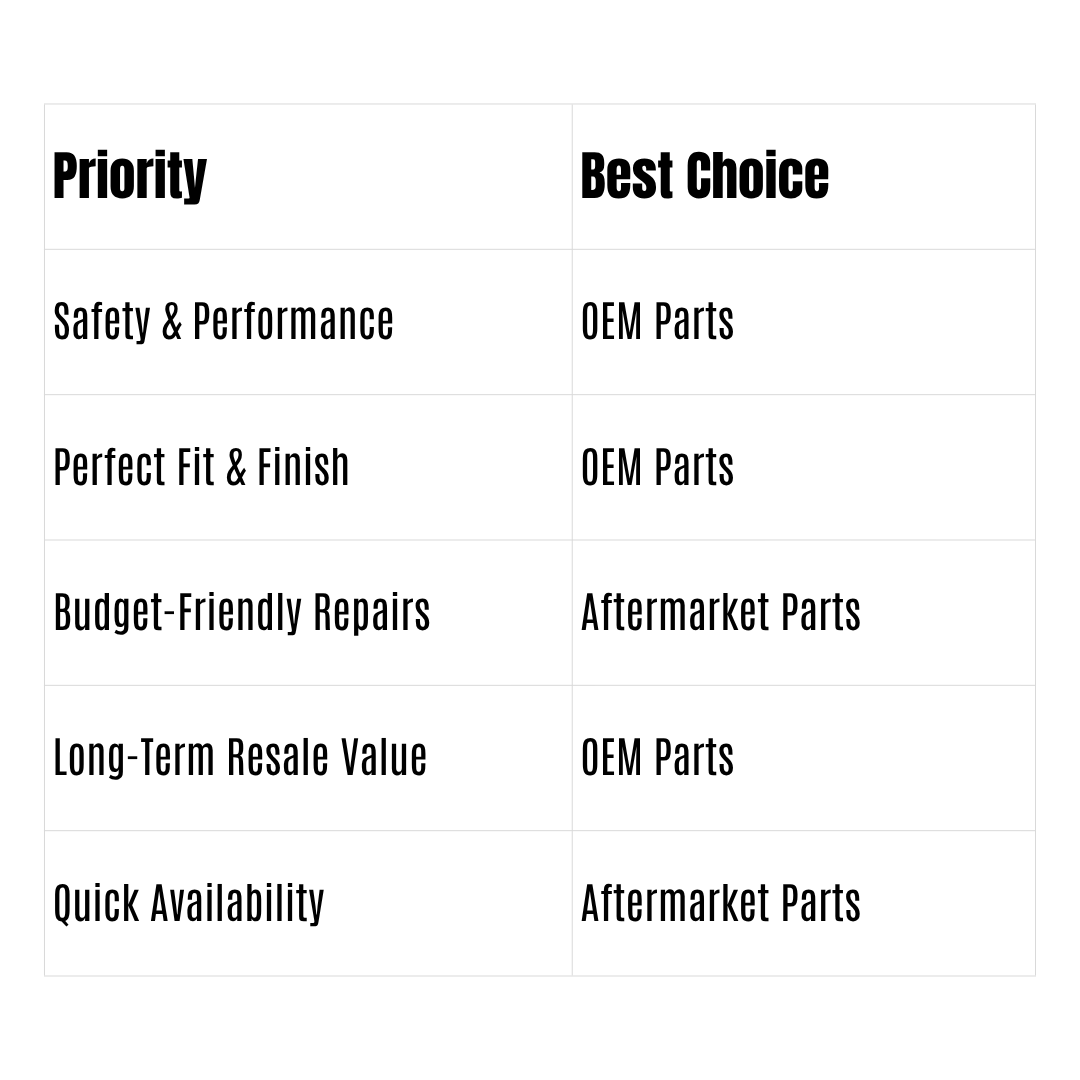
Why Harvil Auto Body Recommends OEM Parts
At Harvil Auto Body, our priority is your safety and satisfaction.
We recommend OEM parts whenever possible because they:
Meet factory safety standards
Provide a perfect fit and seamless finish
Help maintain your vehicle’s resale value
Are backed by a manufacturer warranty
Our team is I-CAR certified and trained to repair vehicles to exact manufacturer specifications, whether it’s a standard sedan, a luxury vehicle, or an EV.
The Bottom Line
Choosing between OEM and aftermarket parts isn’t just about cost — it’s about protecting your investment and your safety.
If you’re unsure which option is best for your situation, talk to our experts at Harvil Auto Body.
We’ll walk you through your options, work with your insurance company, and make sure your car gets the care it deserves.
Because when it comes to collision repairs, quality matters.
If you’re looking for a trusted auto body shop in Tempe, our family has been here for four generations. Let us take care of your vehicle with the craftsmanship you deserve.
