
How to Tell if Your Car Is a Total Loss: What Arizona Drivers Need to Know
When you’re in an accident, one of the hardest things to face is finding out that your car might be a “total loss.” What does that even mean? And how do you know if your vehicle will be totaled, or worth repairing? If you drive in Arizona, there are specific rules and factors to understand — so you can make informed decisions and avoid surprises.
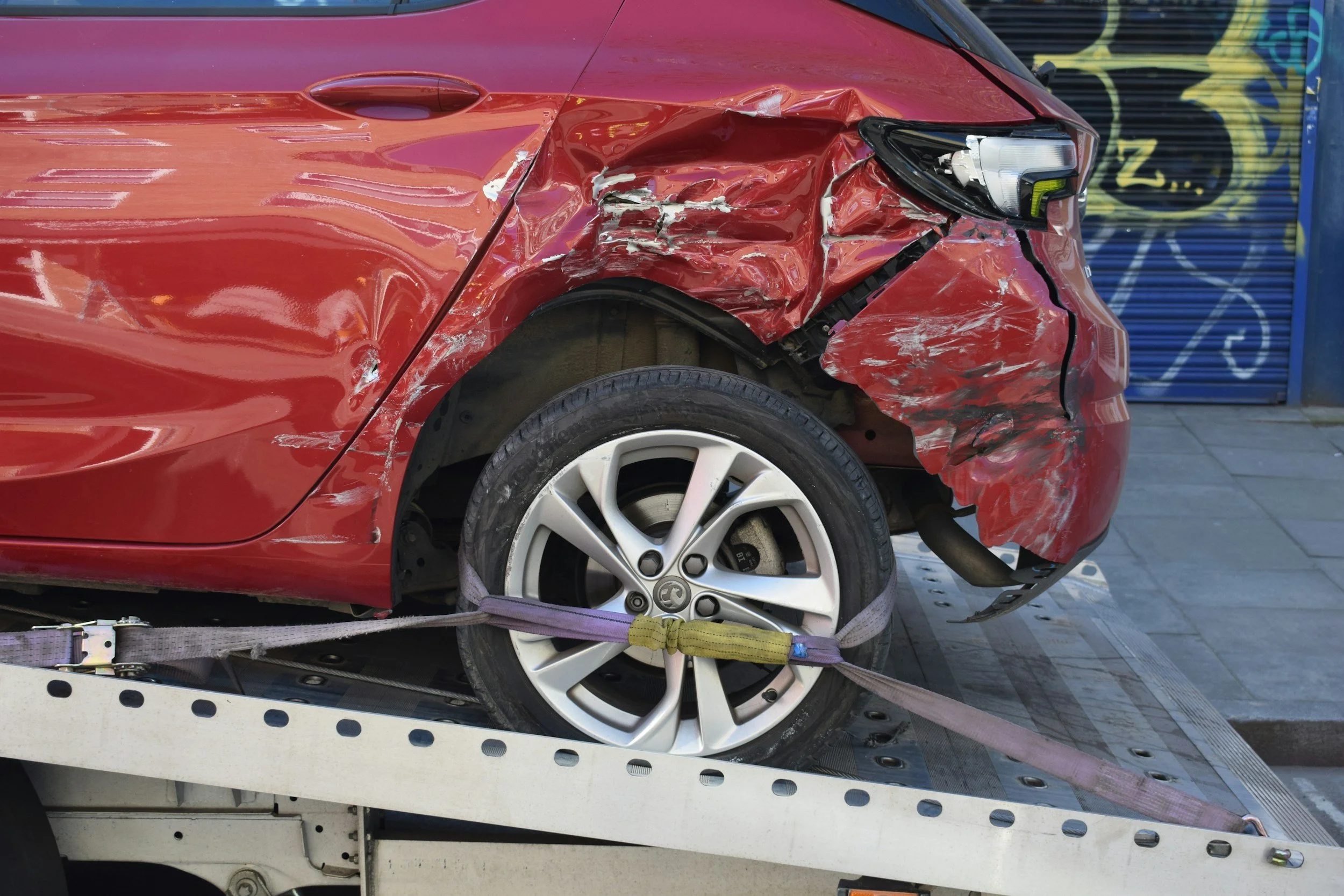
What Does “Total Loss” Mean?
A car is considered a total loss (also called “totaled”) when repairing it is not economically sensible — meaning the cost to fix the damage, plus what the damaged car is worth in its current state (known as “salvage value”), meets or exceeds its value just before the accident.
Arizona law does not set a formula or a percentage, but insurers commonly use this one, called the total loss formula: Repair Cost + Salvage Value ≥ Actual Cash Value (ACV). If that equation holds true, the insurer will usually declare the car a total loss.
What is the total loss threshold in Arizona?
Arizona does not have a fixed percentage total loss threshold. No Arizona statute says a car must be totaled once repairs reach a set percent of its value. Instead, Arizona law (A.R.S. 28-2091) treats a car as a salvage vehicle when it is damaged to the point that the owner or insurance company considers it uneconomical to repair.
To decide what counts as uneconomical, insurers usually use the total loss formula: if the repair cost plus the salvage value equals or exceeds the car's actual cash value (ACV) right before the crash, the car is usually totaled. That formula is how the industry does it. It is not written into Arizona law.
Example (hypothetical round numbers):
Actual cash value before the crash: $10,000
Repair estimate: $7,500
Salvage value of the damaged car: $3,000
$7,500 + $3,000 = $10,500. That is more than the $10,000 ACV, so this car would likely be totaled, even though the repairs alone come to only 75 percent of its value. If the salvage value were $2,000 instead, the total would be $9,500, and repairing it could make more sense.
What you are owed. If you are claiming on your own policy and it settles on actual cash value, Arizona's claim settlement rule (A.A.C. R20-6-801(H)) gives the insurer two options. It can offer you a specific comparable vehicle, or it can pay cash based on what a comparable vehicle costs in your local market, plus applicable taxes, license fees and title transfer fees, minus your deductible. Any deductions, including for salvage, must be itemized with dollar amounts, and the insurer has to explain how it reached the number.
If you disagree with the value. Ask for the valuation report and the comparable vehicles it used. Pull listings for similar cars here in Tempe and around the East Valley, and gather your maintenance records and receipts for recent work. Check your policy for an appraisal provision. If you think your claim is not being handled fairly, you can file a complaint with the Arizona Department of Insurance and Financial Institutions (DIFI) Consumer Protection Division at (602) 364-3100 or difi.az.gov.
We're a body shop, so we write repair estimates, not vehicle valuations. Your policy and DIFI are the best places to go with questions about your specific claim.
Key Factors Insurance Adjusters Consider
Here are the major components and variables they’ll use to decide if a car is totaled:
Extent of Damage & Safety Concerns
Damage to critical systems — like the frame, airbags, chassis — or situations that compromise safety can push toward a total loss. Even if some repairs would fix the visible damage, unseen structural issues might make the car unsafe.Cost of Repairs
This includes labor, parts (OEM or aftermarket), paint, refinishing, alignment, etc. If multiple systems are affected, costs can escalate quickly.Salvage Value of the Damaged Vehicle
What the insurer could recoup from selling or dismantling the car. Higher salvage value lowers the buffer before a total loss is declared.Actual Cash Value Before the Crash
How much your car was worth in its pre-accident state — not what you paid, or what you think it’s worth.Local Market Conditions
Used car prices in your area, the demand for your car’s make/model, how many similar cars are available, etc. All influence ACV.Your Insurance Policy Details
Deductibles, whether you have collision or comprehensive, plus other costs (tax, title, fees) may come into play. Sometimes these are included in what you are entitled to after a total loss in Arizona.
What Happens Legally & Financially When a Car Is Declared Totaled
Settlement Payment
You’ll generally be paid the ACV (pre-crash value), minus your deductible. If you’re not at fault, the at-fault driver’s insurer is responsible.Title & Salvage Certificate
The insurer often takes ownership of the car and applies for a salvage title. The title status will reflect that the vehicle was declared a total loss.Can You Keep the Car?
In some cases, yes — you might be able to negotiate to keep the car, rebuild, or repair at your own cost, but you’ll usually receive less money because the salvage value is subtracted from the payout. Also, the car will carry a salvage title. Once it is repaired and passes an ADOT Level III inspection, it can get a restored salvage title. Either one can affect resale, insurance and inspection requirements.
Frequently Asked Questions (Arizona Drivers)
Is there a fixed percentage (like 70% or 80%) where insurance must total the car?
No. Arizona law does not set a total loss percentage. Under A.R.S. 28-2091, a car becomes a salvage vehicle when the owner or insurer considers it uneconomical to repair, and insurers usually measure that with the total loss formula (repair cost plus salvage value compared with actual cash value).
Can I contest a total loss decision or payout?
Yes. If you think the insurer undervalued your car (ACV), or misestimated salvage or repair cost, you can gather evidence: recent comparable listings, vehicle condition proof, maintenance records, independent appraisals.
Are fees like tax, title, and license included in total loss payout?
On a claim under your own policy that settles on actual cash value, yes. Arizona's claim settlement rule (A.A.C. R20-6-801(H)) says a cash settlement must be based on the cost of a comparable vehicle, including applicable taxes, license fees and other title transfer fees, minus your deductible. The rule does not say you must buy a replacement to get them. If you are claiming against another driver's insurer, ask the adjuster how taxes and fees are being handled.
What if I owe more on my loan than the ACV?
Then you may still be responsible for the difference unless you have Gap Insurance. Gap coverage may cover the gap between what you owe and the insurance payout.
Does Arizona use the total loss formula?
Not by law. Arizona does not set a total loss formula or percentage in statute. The total loss formula (repair cost plus salvage value compared with actual cash value) is the method insurers commonly use to decide whether a car is uneconomical to repair, which is the standard in A.R.S. 28-2091.
What title does a totaled car get in Arizona?
Usually a salvage title. When an insurer takes ownership of a car in a total loss settlement, A.R.S. 28-2091 requires it to apply to ADOT MVD for a salvage certificate of title within 30 days after the title is signed over to it. A car with no value beyond parts or scrap gets a nonrepairable title instead. If you keep your totaled car, you need to take care of the salvage title before you receive the settlement. After a salvage car is repaired, it can get a restored salvage title once it passes an ADOT Level III inspection (A.R.S. 28-2095). Anyone who sells a salvage or restored salvage car, and knows its title status, has to disclose that status to the buyer in writing before the sale.
Can I drive a car with a salvage title in Arizona?
Not on a regular registration. According to ADOT, a salvage-titled vehicle can only be driven on a temporary three-day permit, or after it has been repaired, passed a Level III inspection, received a restored salvage title and been registered.
What You Can Do to Protect Yourself
Document everything. Take lots of clear photos of all damage, inside and out.
Keep good maintenance records. Well-documented repairs, clean interior and exterior, low mileage — all this helps raise your ACV.
Ask for comparable vehicle listings in your area to show what similar cars are going for.
Get multiple estimates of repair, not just one. Sometimes shops will find additional damage after taking apart the car.
Review your insurance policy ahead of time — know your deductibles, what kinds of coverage you have, and what a total loss payout includes.
When Repair Might Still Be the Right Call
Even if your car is close to the threshold:
If you have sentimental value in the car or rare parts.
If the car has parts that are worth more refurbished.
If you find a cost-effective shop, you might be able to repair for less than what the insurance adjuster estimated.
But do this carefully — especially with safety in mind. A poorly repaired frame or major component could compromise your safety and value later.
The Bottom Line
If you’re in Arizona and your car looks like it might be tough to fix, here’s the rule of thumb:
If the cost to repair + what the damaged car would be worth as salvage is equal to or greater than what the car was worth before the accident (ACV), your insurance will likely class it as a total loss.
Understanding this gives you power: you’ll be better prepared to talk with your insurer, negotiate if needed, and make the best choice for your safety, finances, and peace of mind.
If you’re looking for a trusted auto body shop in Tempe, our family has been here for four generations. Let us take care of your vehicle with the craftsmanship you deserve.